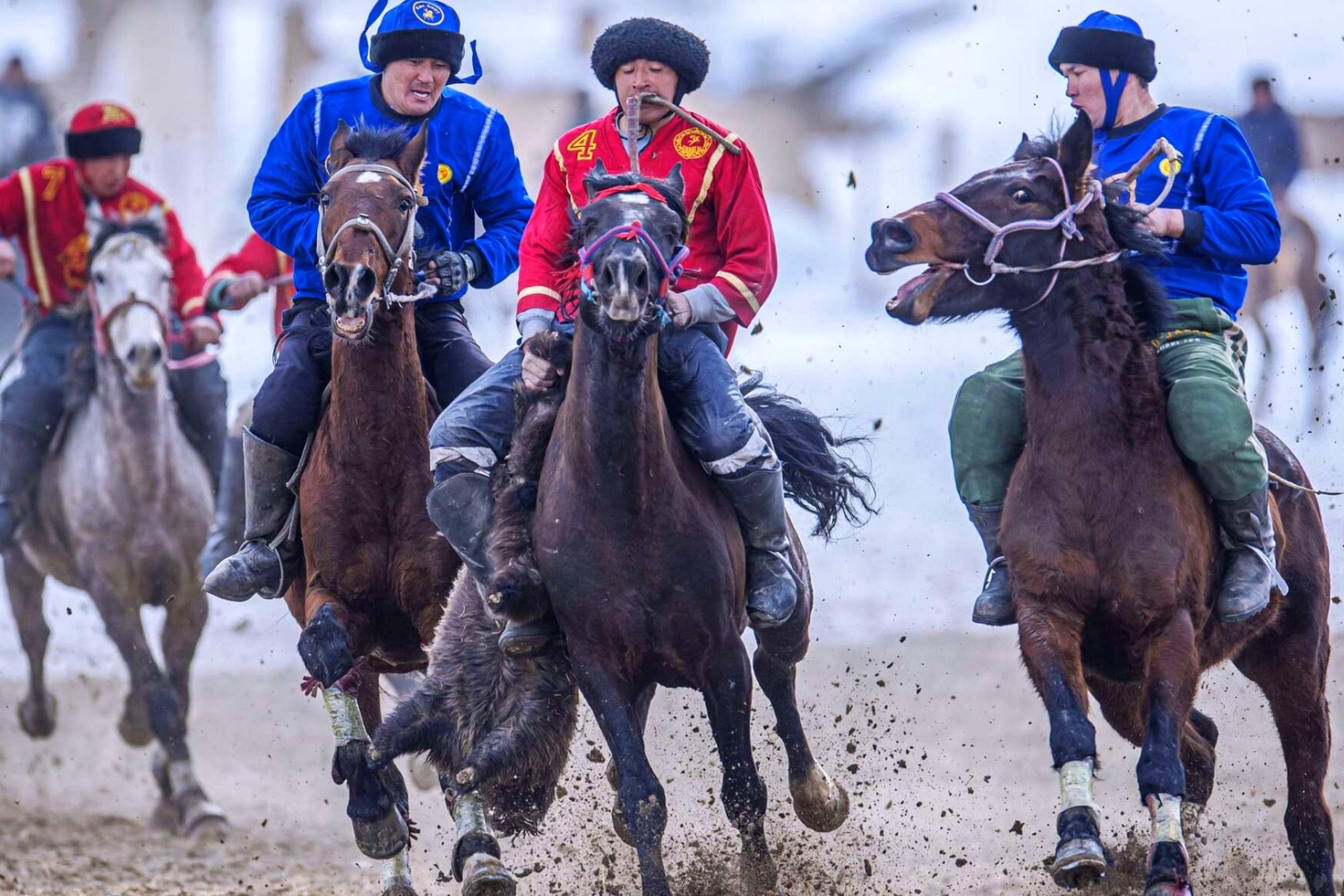
In Kyrgyzstan, these competitions are not just sports; they are continuations of ancient rituals, military training, and social cohesion. Alaman Ulak, Ulak, and Kok-Boru are vital parts of the country’s intangible cultural heritage and today are major highlights of ethnographic tourism.
Alaman Ulak — Mass Competition of Strength and Unity
Alaman Ulak is the largest and most spectacular form of mounted games. Hundreds or even thousands of riders compete simultaneously to capture a carcass. Despite the apparent chaos, the game includes tactical and team elements: riders often collaborate to break through dense groups of opponents.
The traditional game object is a goat carcass weighing about 40 kg (sometimes a calf or lamb). Players aim to grab and transport it to a designated location while referees ensure fair play.
Sometimes, the carcass is ceremonially passed to an honored guest, symbolizing respect and hospitality — key values in Kyrgyz culture.
The Sacred Role of the Carcass in Nomadic Tradition
For nomadic herders, animals were classified as “heavenly” or “earthly.” Horses, cows, and goats were considered heavenly and used in rituals and sacrifices during significant family or tribal events. Hence, goat or calf carcasses are typically used in Alaman Ulak.
Rams were seen as earthly, utilitarian animals used in informal summer games. These competitions still held social importance, strengthening community ties. A victor might throw the carcass at a respected guest or another household — a symbolic gesture of honor, reward, or alliance.
Ulak — The Most Accessible and Popular Game
Ulak is a smaller-scale version of the game with similar rules but fewer participants. It emphasizes individual skill, stamina, and tactics. It is played nationwide (except in Talas, where Kok-Boru is preferred) and often features in village festivals and tourist ethnofestivals.
Kok-Boru — Kyrgyz National Sport
Kok-Boru (“Gray Wolf”) has ancient roots linked to wolf hunting. Riders initially competed over captured predators, which evolved into a team sport with defined rules and strategy.
Key Rules of Kok-Boru:
- Played between two teams
- Goal: score by placing a goat carcass into the opponent’s goal (tai-kazan)
- Teams: 8–12 riders
- 4 players from each team active on the field at a time
- Three periods of 20 minutes each
- The team with the most goals wins
The field is roughly the size of two football pitches, making the game extremely dynamic and thrilling.
Horses in Kok-Boru — The Elite of Nomadic Tradition
Professional riders compete only on specially trained horses. These horses are not used in agriculture or by casual riders. Horses are selected for speed, power, and skill to handle the carcass and support strategic maneuvers. The bond between rider and horse is critical and formed over years.
Equestrian Games and Tourism in Kyrgyzstan
Alaman Ulak, Ulak, and Kok-Boru offer more than entertainment — they reflect the character, history, and values of the Kyrgyz people. Today, these games are central to ethnotourism and cultural tours, allowing visitors to witness authentic traditions firsthand.
Ethno-Tours with VISIT-KG
Tour operator VISIT-KG organizes ethnocultural tours across Kyrgyzstan, including national festivals, competitions, and equestrian games. For over 7 years, VISIT-KG has designed itineraries that showcase Kyrgyzstan through its traditions, people, and living culture.
Travelers can expect:
- Visits to ethno-festivals and national competitions
- Insights into nomadic traditions
- Experienced guides
- Comfortable organization and logistics
- Authentic experiences beyond mainstream tourism
With VISIT-KG, explore Kyrgyzstan’s traditions and equestrian culture for a meaningful, immersive journey.