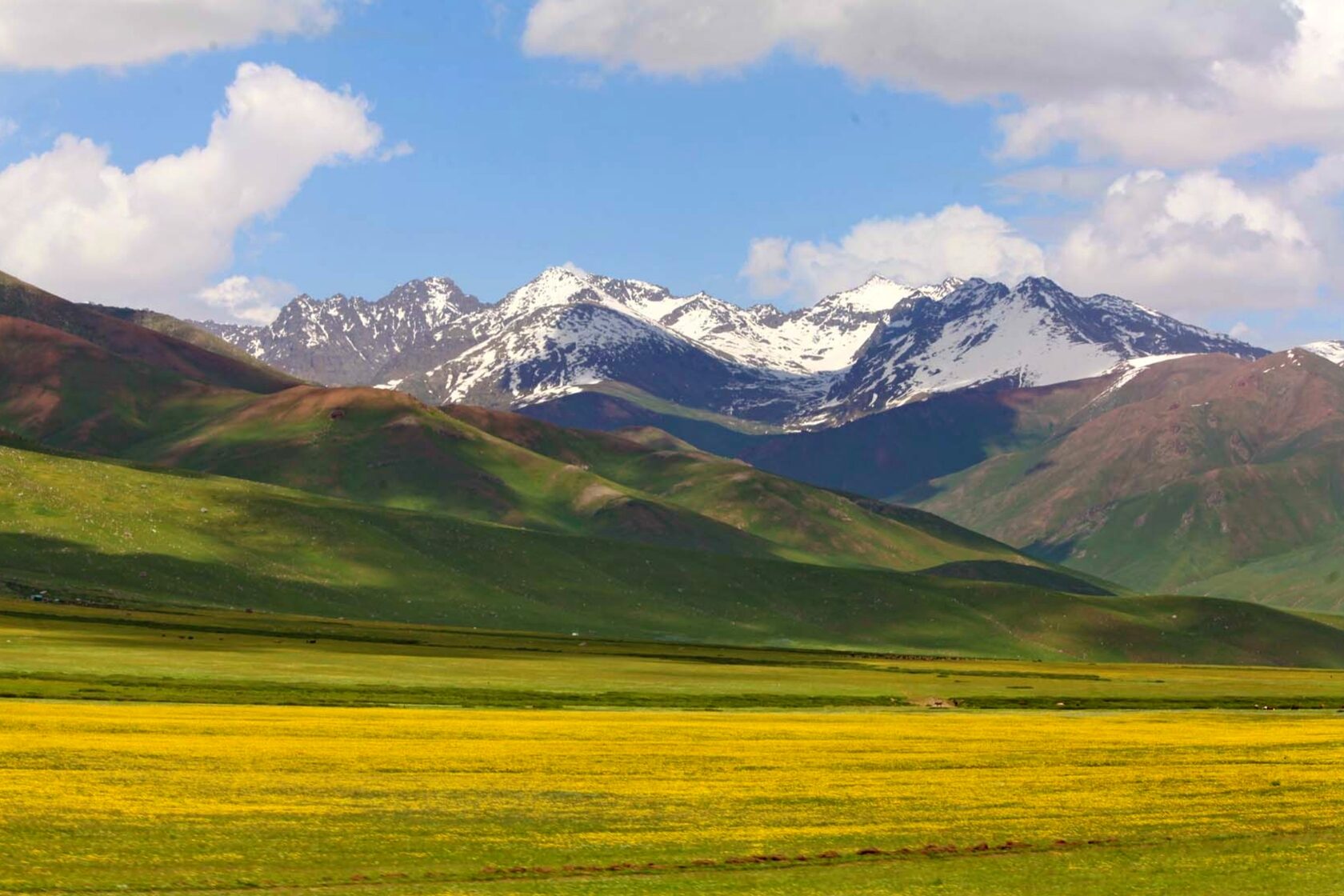
The Chuy Valley is one of the most important and diverse regions of Kyrgyzstan. Located in the northern part of the country along the border with Kazakhstan, it stretches across vast plains framed by the dramatic peaks of the Tian Shan.
For many travelers, the Chuy Valley becomes their first introduction to Kyrgyzstan. The country’s capital, Bishkek, is located here, and major roads connect the valley with top destinations such as Issyk-Kul, mountain gorges, and historical Silk Road sites.
Far from being just a transit region, the Chuy Valley is a destination in its own right — offering a rich mix of nature, history, and cultural heritage.
Nature and landscapes of the Chuy Valley
The landscapes of the Chuy Valley are surprisingly diverse and visually striking. Travelers can experience:
- vast open степи and fertile agricultural lands
- green foothills and alpine meadows
- rivers, canyons, and mountain passes
One of the most remarkable features of the valley is its proximity to the mountains. The snow-capped peaks of the Tian Shan form a constant backdrop, creating a powerful contrast with the flat plains below.
The climate is relatively mild, making the region suitable for travel year-round:
- spring brings blooming fields and fresh greenery
- summer offers warm weather and access to mountain areas
- autumn is known for golden landscapes and harvest season
Silk Road heritage and historical importance
The Chuy Valley played a crucial role in the history of the Silk Road, particularly along the Chuy route, which connected Central Asia with China.
During the Middle Ages, the valley was home to major cities and trading hubs, including:
- Balasagun — a political and cultural center of the Karakhanid state
- Suyab — once the capital of the Western Turkic Khaganate
- Nuzket — an important settlement near present-day Kara-Balta
These cities served as centers of trade, craftsmanship, science, and cultural exchange. Caravans carrying silk, spices, and precious goods passed through this region, shaping its identity for centuries.
Top attractions in the Chuy Valley
Burana Tower
One of the most iconic landmarks in Kyrgyzstan and a must-visit site for anyone interested in Silk Road history.
The tower is all that remains of the ancient city of Balasagun. Visitors can:
- climb to the top for panoramic views
- explore the open-air museum
- see ancient stone statues (balbals)
- walk among archaeological ruins
Suyab
An important archaeological site that offers insight into early medieval Central Asia.
Although mostly ruins today, Suyab carries deep historical significance and provides a unique atmosphere for travelers interested in ancient civilizations.
Boom Gorge
A dramatic natural corridor connecting the Chuy Valley with Issyk-Kul.
Highlights include:
- rugged cliffs and mountain scenery
- the Chu River flowing through the gorge
- scenic viewpoints perfect for photography
This is one of the most picturesque routes in northern Kyrgyzstan.
Travel and tourism in the Chuy Valley
The Chuy Valley is an excellent base for exploring northern Kyrgyzstan. From here, travelers can easily reach:
- Issyk-Kul
- mountain gorges and national parks
- historical Silk Road landmarks
Popular travel formats include:
- day trips from Bishkek
- road trips across the region
- cultural and historical tours
- food and local experience tours
Thanks to its infrastructure and accessibility, the region is ideal for both independent travelers and guided tours.
Why visit the Chuy Valley
The Chuy Valley offers a unique combination of:
- rich historical heritage
- easy accessibility and developed infrastructure
- key Silk Road landmarks
- diverse natural landscapes
It is often underestimated, but in reality, the Chuy Valley provides one of the most complete travel experiences in Kyrgyzstan — combining past and present, culture and nature.